Mobile App Product Design & No-Code Development
Seen

View Case Study

YEAR
ROLE
Company
In the bustling landscape of events and social apps, Kameo emerges as a game-changer. Addressing the gap in the market for a platform that facilitates instant connections based on shared interests, my role as the lead designer was to sculpt a state-of-the-art experience that sets Kameo apart from its competitors. This case study delves into the end-to-end design process, collaboration with stakeholders, and the seamless integration of technology to bring the vision of "Socialise on Demand" to life.
Challenges in the Market: In a world saturated with options, users lacked a platform where they could effortlessly find and connect with like-minded individuals in real-time. The challenge was to create an app that not only simplified the process of meeting new people but also made it as quick and exciting as ordering a meal on Deliveroo or a ride on Uber.
Vision: Socialise on Demand: The fundamental goal of Kameo is to enable users to instantly see and join others nearby who share common interests or are attending similar events. Whether it's a solo traveler in a foreign city looking for fellow explorers or locals seeking spontaneous connections, Kameo aims to make socializing on demand a reality.
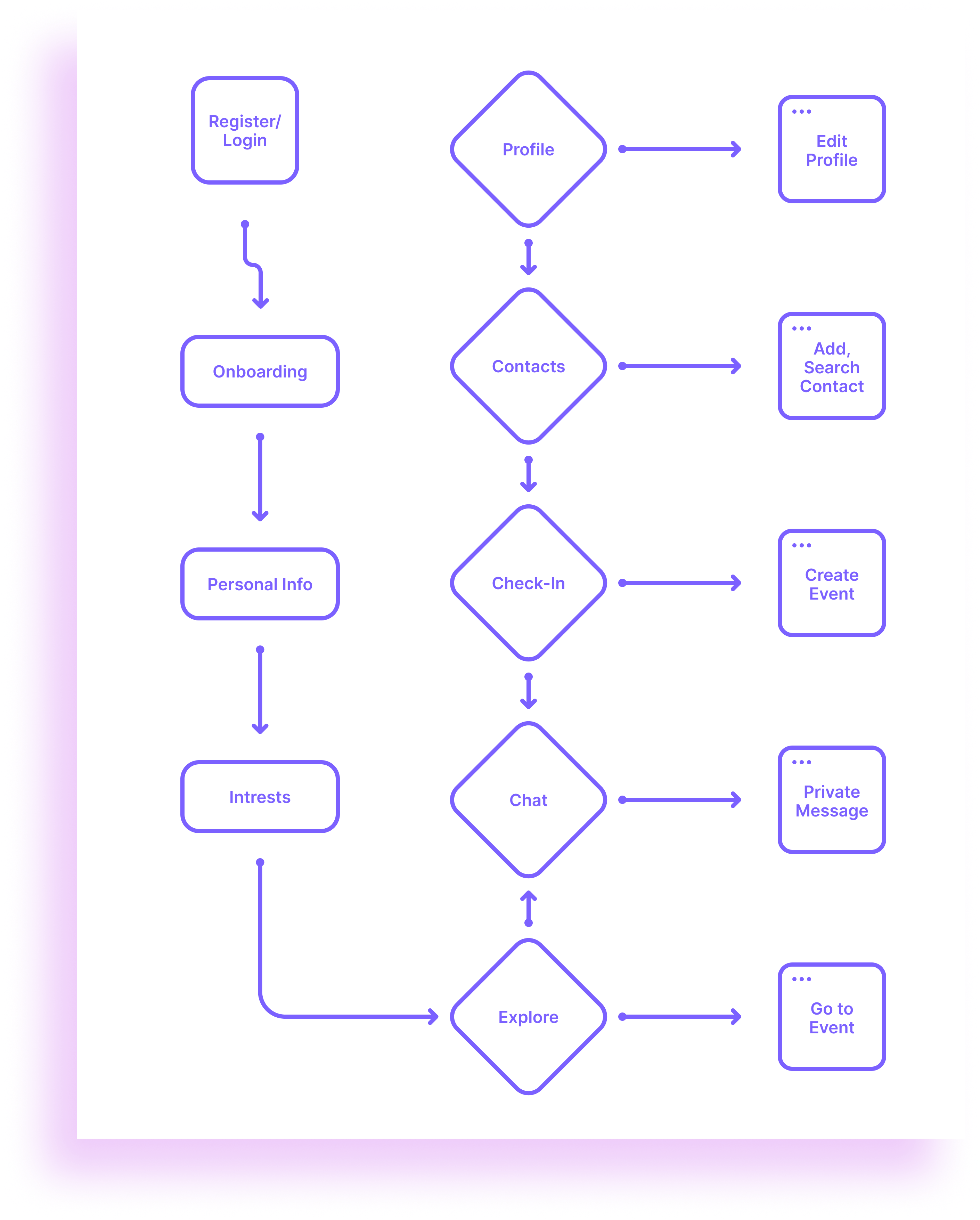
The design journey of Kameo commenced with the raw creativity of paper sketches. Pencil met paper as ideas flowed freely, giving form to the initial concepts that would later blossom into a revolutionary social app. These sketches, born from collaborative brainstorming sessions, laid the groundwork for the app's structure and flow.
I started the design process with low-fidelity wireframes made at a Team Meeting. This way I quickly presented the experience I envisioned to the stakeholders, collected all ideas, and approved a final direction.
To encourage Top-Down processing in the user's brain, the information is presented from top-to-bottom showing the input needed from the user first to get a desired outcome when the action at the bottom is performed.
The hierarchy allows a great human-technology interaction based on how our eyes scan information, and how our fingers can reach the bottom part of the screen without conscious effort.
It was a great base for the User Experience and helped me move forward with the User Interface High Fidelity Designs.
The sketches depicting evolving algorithms weren't just theoretical. They became the blueprints for our machine learning integration. These sketches outlined a dynamic system where user interactions shape a personalized journey, ensuring that every connection suggested by Kameo is a tailored masterpiece.
Wireframe
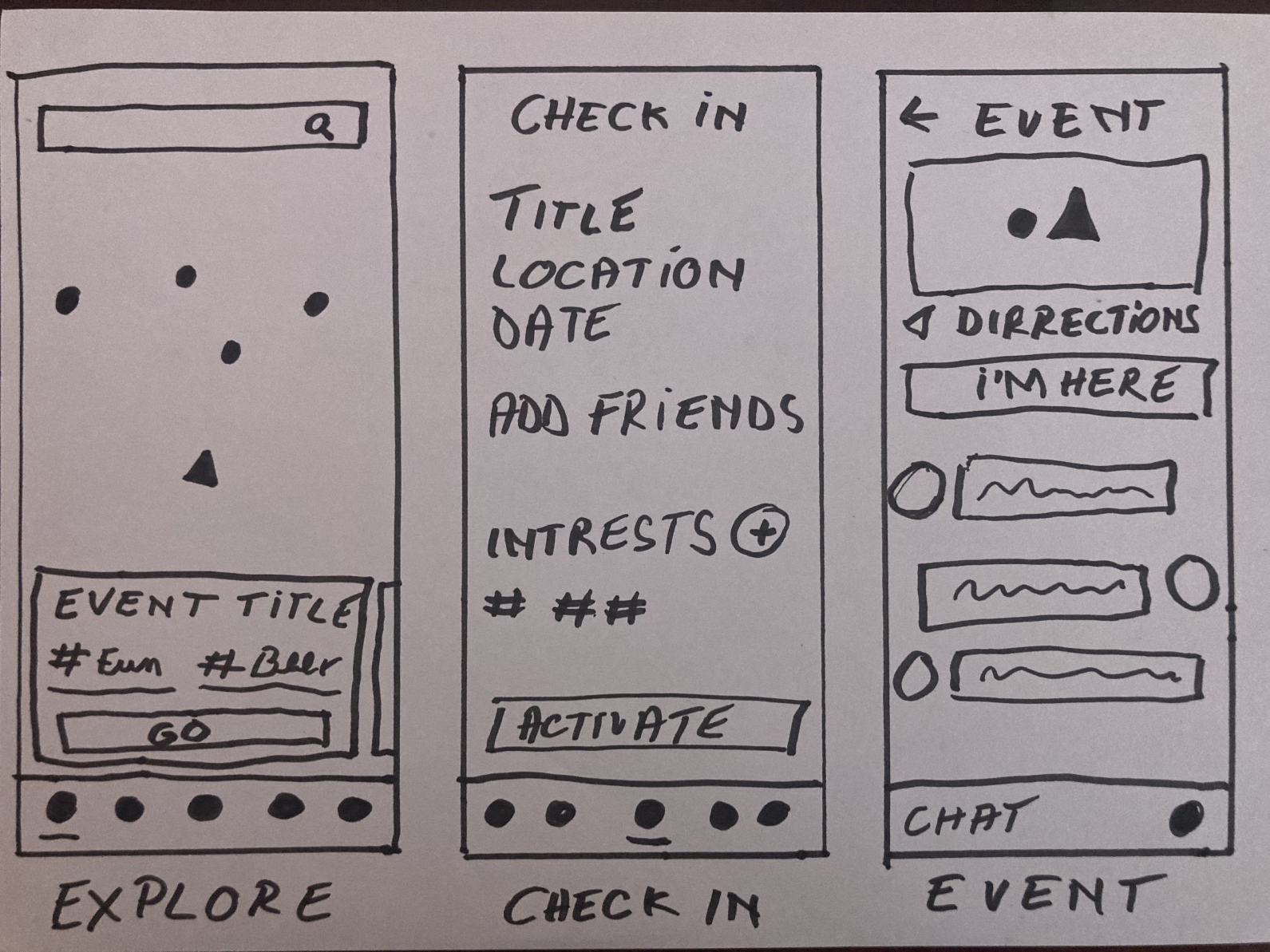
With promising concepts from paper sketches, we transitioned to the digital realm with wireframes. These skeletal representations of our app's interface outlined the structural framework and user flow, providing a blueprint for the design to come.
Wireframing clarified the app's architecture, defining key elements and interactions. It laid the groundwork for a user-centric design, ensuring that functionality took precedence before visual elements. This phase facilitated early feedback and alignment with stakeholder expectations.
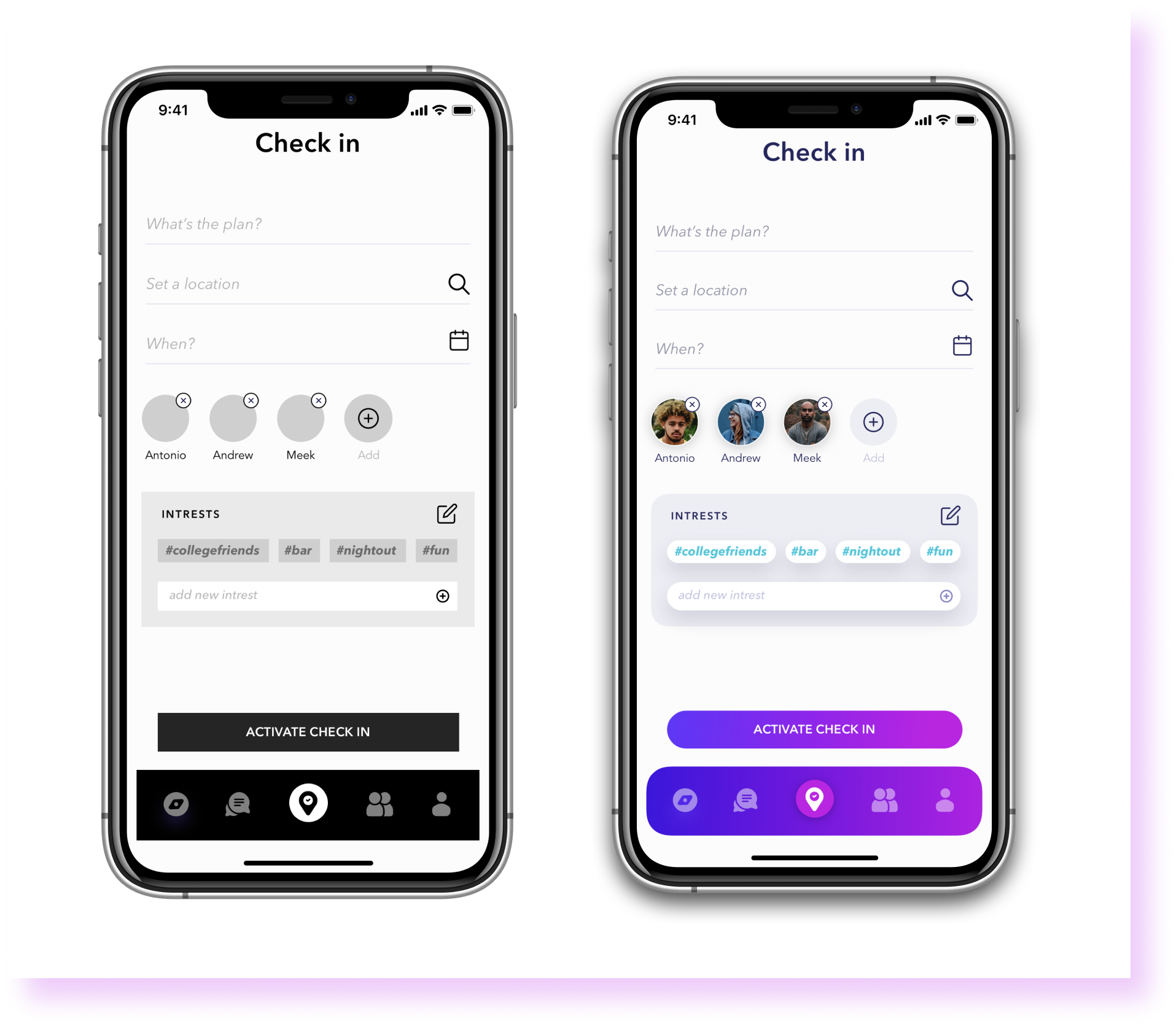
From the manual sketches, I made low-fidelity wireframes in Figma following the latest appropriate techniques of Usability and Adoption to create an intuitive experience.
Using different opacity in the low-fidelity stage allowed me to keep the high fidelity in mind all the time and helped me to keep the creativity alive during the process.
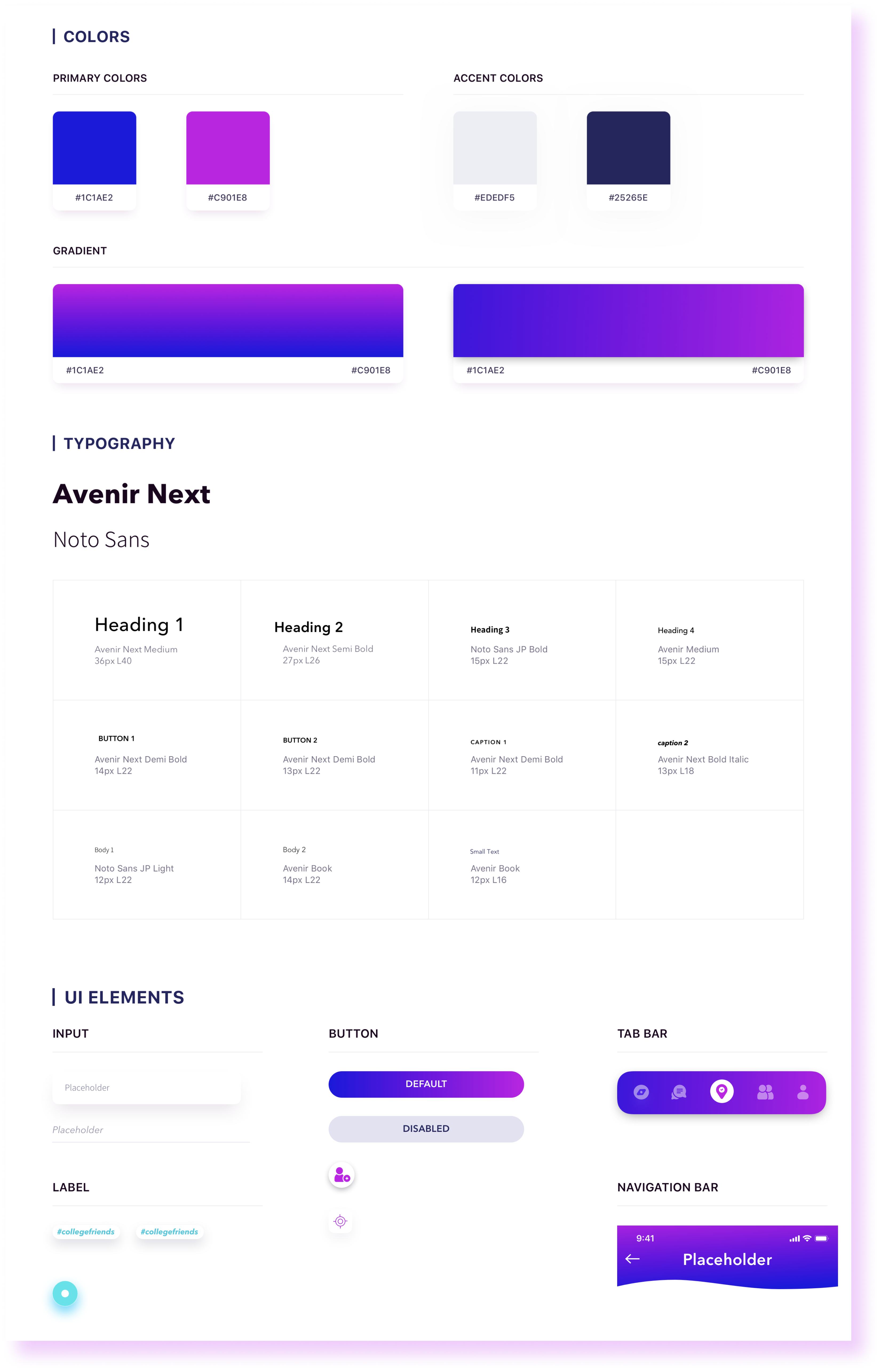
To have a single source of truth, a clear direction from the beginning, and to scale the design quickly I built a Design System using Atomic methodology.
Having the basic elements and components visual style defined helped me build all the features and screens quickly while keeping consistency.
The collaboration with the Development Team also increased as they had clear documentation and derivable.
To maintain consistency and streamline the design process, we developed a comprehensive design system. This system established standardized elements, such as color palettes, typography, and UI components. It served as a design language that would resonate throughout Kameo.
The design system was the backbone of Kameo's visual identity. It promoted a cohesive and polished look across the app, enhancing the user experience by providing a familiar and harmonious interface. Updates to the design system were implemented seamlessly across the app.
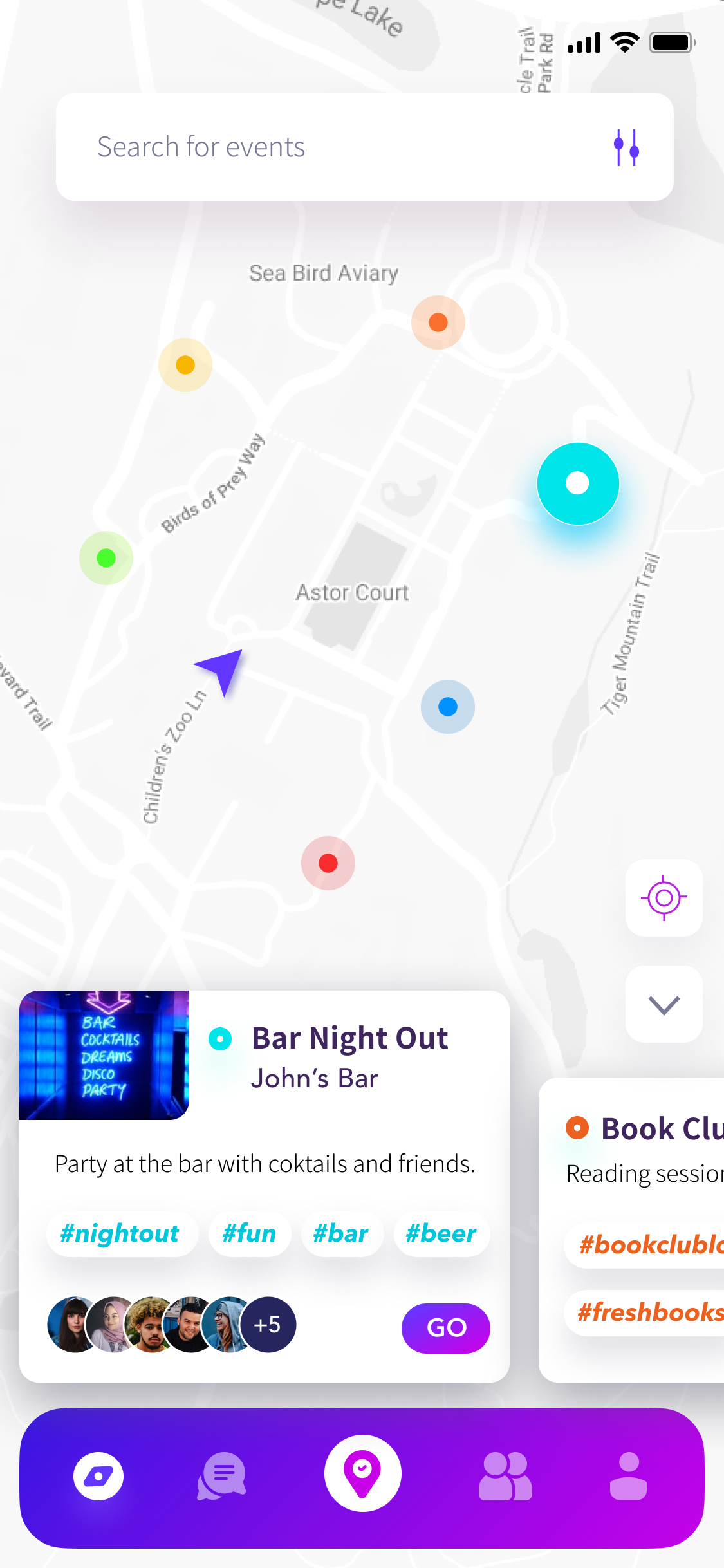
Once the Design System was established, I continued designing the entire product following the User Journey, Wireframes, and Visual Direction determined in previous steps.
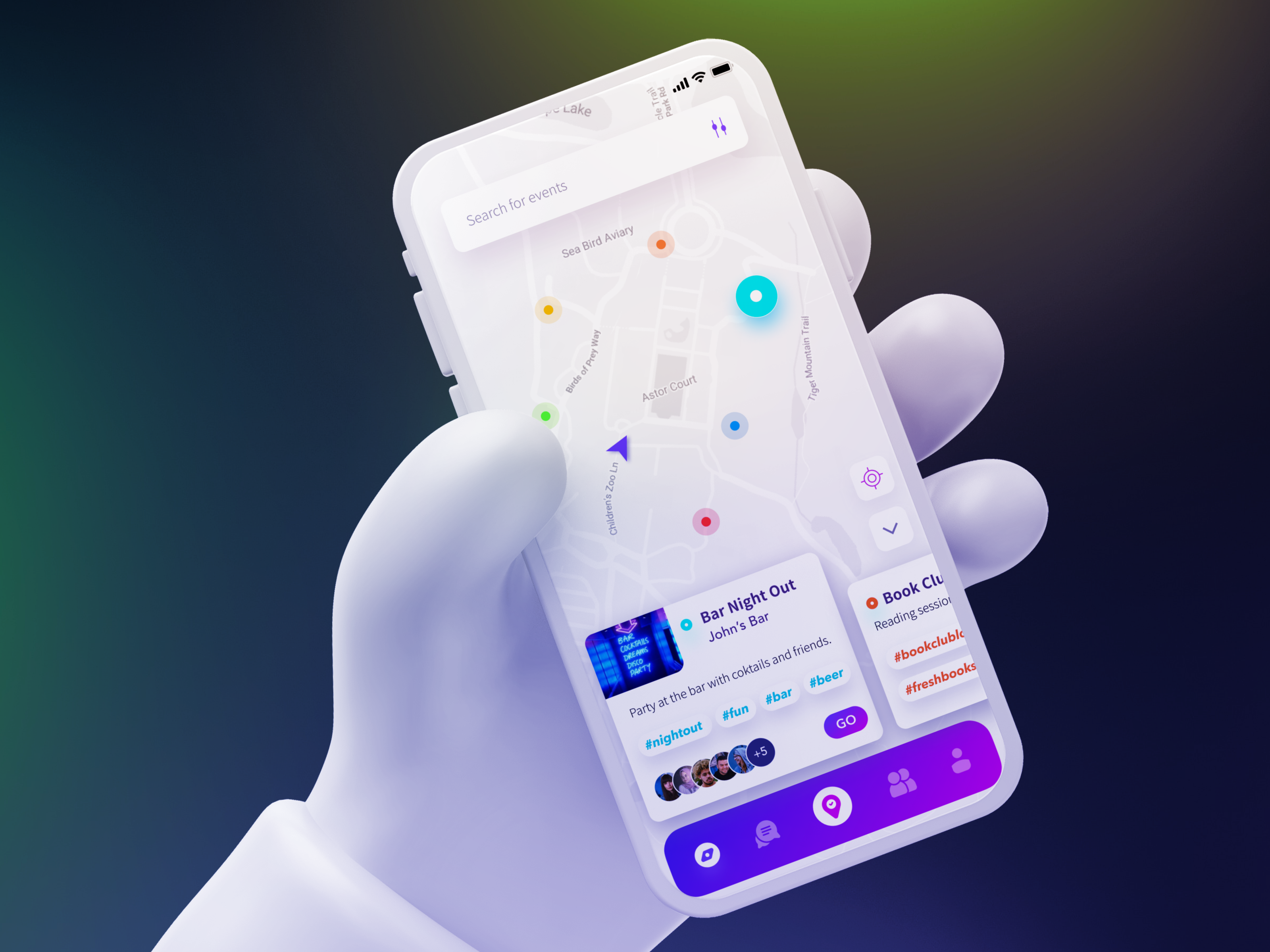
The bright color scheme of blue and violet used together is a combination of Intelligence, communication, (blue color psychology) and vision, luxury, (violet color psychology) which are used together to create an exciting User interface.
The use of rounded corners and shapes combined with bold, vivid colors communicates a friendly, open, enthusiastic experience.
UI design focused on the aesthetic details, from color schemes to iconography. It aimed to strike a balance between visual appeal and functionality, creating an interface that not only looked modern but also facilitated an effortless and enjoyable user experience.
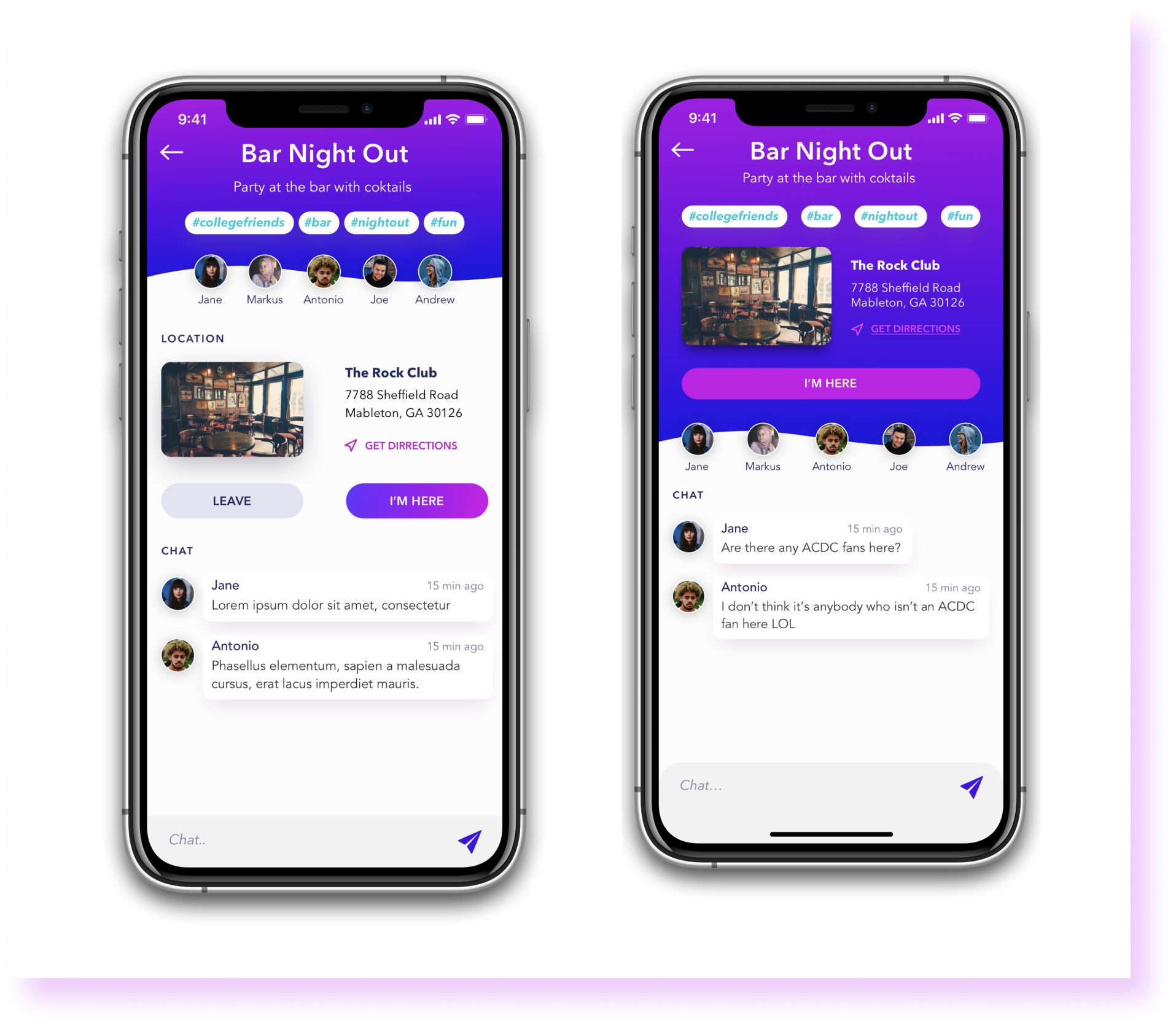
After I conducted User Testing I found out that all users got confused on the Event page and didn't understand well the relationship between the location, participants, and chat features.
The solution was to have the top side emphasized by the background gradient so the user attention is grabbed where the Event information is and by making good use of visual hierarchy principles, the information can be quickly scanned.
The transition to the bottom part is made with the participants' avatars and names, so the users can understand
In the second round of testing, this confusion didn't occur anymore.
User testing brought the design to the real world. Feedback from diverse users guided adjustments to the interface, improving usability and addressing any unforeseen challenges. It was a crucial step in fine-tuning Kameo to meet the expectations and preferences of its users.
Conclusion: Kameo is not just a social app; it's a paradigm shift in how we connect with others. By spearheading the design process from ideation to execution, the aim was to create an experience that stands out in a crowded market. "Socialise on Demand" is not just a tagline; it's the embodiment of Kameo's mission to make meeting new people as easy and instant as ordering a pizza or a ride. This case study showcases not only a product design journey but a commitment to redefining social interactions in the digital age. Kameo is poised to become the go-to platform for those who seek more than just events – they seek connections.